

Key Takeaways
- Changes in taste, smell, and appetite can make meals feel harder than they used to be.
- A quiet room, solid-color plates, and fewer utensils help meals feel calmer.
- Smaller meals through the day, plus soups and water-rich fruit, support good nutrition.
- Finger foods, rimmed plates, and extra time encourage independence at the table.
- Memory care and assisted living communities offer trained mealtime support and social dining.
Why Meals Can Feel Harder with Dementia
You set the plate down, and your loved one just looks at it. The food is warm, the seat is comfortable, and still, nothing happens. Our team at All American Senior Living at Kingston understands that mealtimes can feel like a puzzle when you’re caring for someone living with dementia. And we’re here to solve this puzzle with you.
Small adjustments to the setting, the plate, and the pace of the meal can all help. These changes make eating feel easier and more enjoyable for someone with dementia. As the condition progresses, taste and smell may shift, and a full table of choices can feel like too much.
Common Reasons Appetite Drops
There’s usually a reason why someone stops finishing their meals. A few common ones show up again and again.
- Food no longer looks familiar on the plate
- Dentures don’t fit comfortably anymore
- Low activity levels during the day decrease appetite
- There’s too much noise or movement in the room
Once the reason becomes clear, the fix can be simple. A softer meal, a quieter room, or a short afternoon walk can change how the next dinner goes.
How to Set Up a Calm Mealtime Space
Think about the difference between eating in a busy diner and eating at a quiet kitchen table. Loud noises can turn a tasty meal into a distracted one. Turn the television off and keep the room quiet. Let the meal come through as the main event.
Also consider keeping the table setting simple. Busy patterns on tablecloths and dishes can make food hard to pick out. Make sure to always test the temperature of hot food before serving. A calm, familiar setting can support clear communication regarding mealtimes with someone living with dementia.
Plate and Table Tips That Help
The right dishes do a surprising amount of work. Try these small swaps.
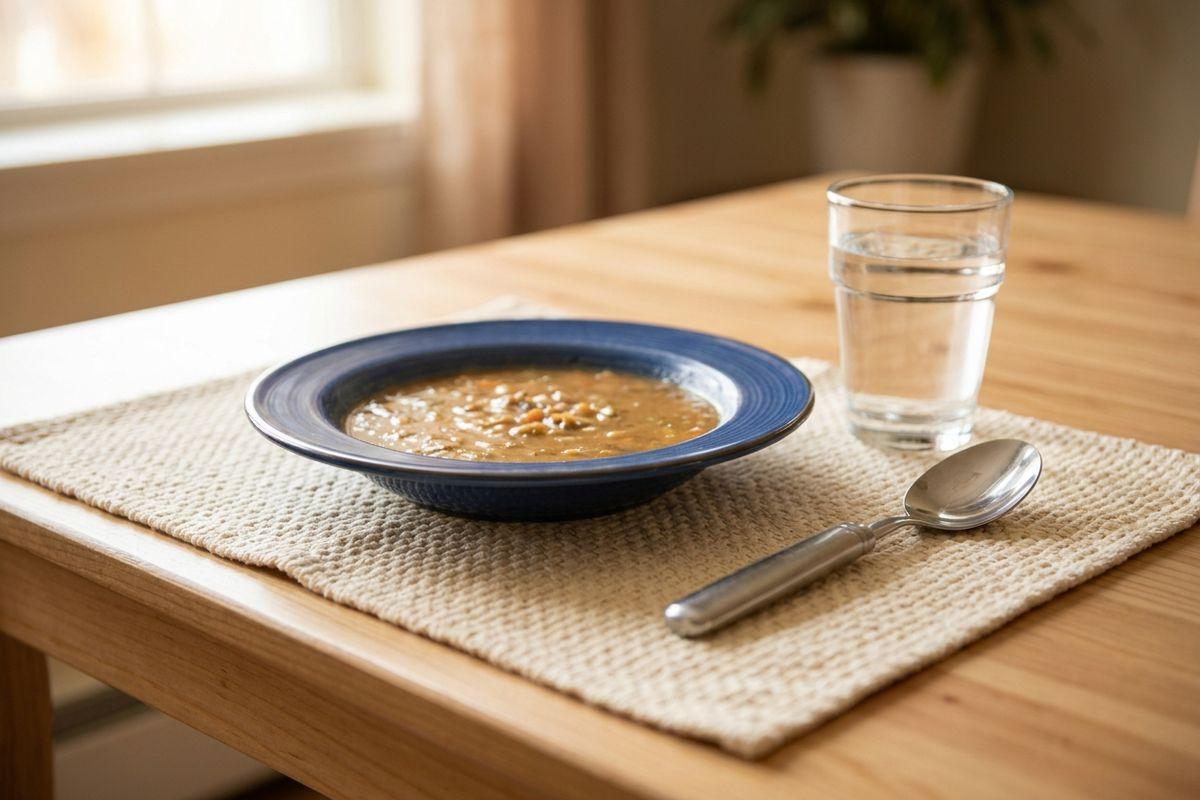
- Solid-color plates set against a contrasting placemat
- Only the utensils needed for that meal, nothing extra
- A non-skid cloth under bowls to keep them steady
- One glass on the table at a time
When a plate stands out clearly from the table, food becomes easier to spot and reach. That one change alone can help someone start eating without constant reminders.
Simple Meal Ideas and Nutrition Basics
Designing a balanced plate can be straightforward. Aim for produce, whole grains, and lean protein. And keep portions modest. Smaller meals throughout the day often work better than three large ones. You may also want to look into meal planning tips for seniors for extra ideas.
Herbs and spices can bring flavor back to food without adding extra salt. A little cinnamon on oatmeal or basil on tomatoes can reignite interest for a former favorite dish. What ends up on the plate matters. It’s crucial to recognize the role that diet plays in brain health.
How to Support Someone with a Smaller Appetite
A full plate can feel like too much for those living with dementia. Try serving one or two items at a time. Favorite foods are worth leaning into. In addition, finger foods can encourage eating by turning a stuffed plate into small, easy bites.
Give your loved one ample time to finish the meal. One meal can take an hour or more. A relaxed pace often leads to more food eaten overall.
Independence at the Table
Doing things independently matters, no matter the time of day. A few tools make that possible.
- Bowls and rimmed plates that keep food from sliding off
- Large-handle spoons that are easier to grip
- Cups with handles on both sides
- Foods that hold together well in one hand
Hands and fingers are perfectly welcome at the table. Let go of worries about neatness and focus on the eating itself. Sharing the meal can also help by making eating feel like a social event. Don’t underestimate the power of staying social. It can support well-being through all stages of aging.
Mealtime Support in a Memory Care Community
Mealtimes take patience, and families don’t have to manage them alone. In a memory care community, trained team members guide each and every meal. They offer cues and encouragement at a comfortable pace. That steady support gives everyone involved added peace of mind.
Shared dining tables bring back the social side of eating. There are different senior living options, like assisted living, memory care, and respite care, for different needs. This allows families to choose what fits right now.
Choosing Easier Mealtimes
Small changes add up. A quieter room, a solid-color plate, and a little extra time can turn a difficult meal into an enjoyable one.
Nutrition is the foundation of healthy living. All American Senior Living at Kingston is here to support families across New Hampshire with warm, personalized care. Reach out today and schedule a visit to see what mealtimes and daily life can feel like here.